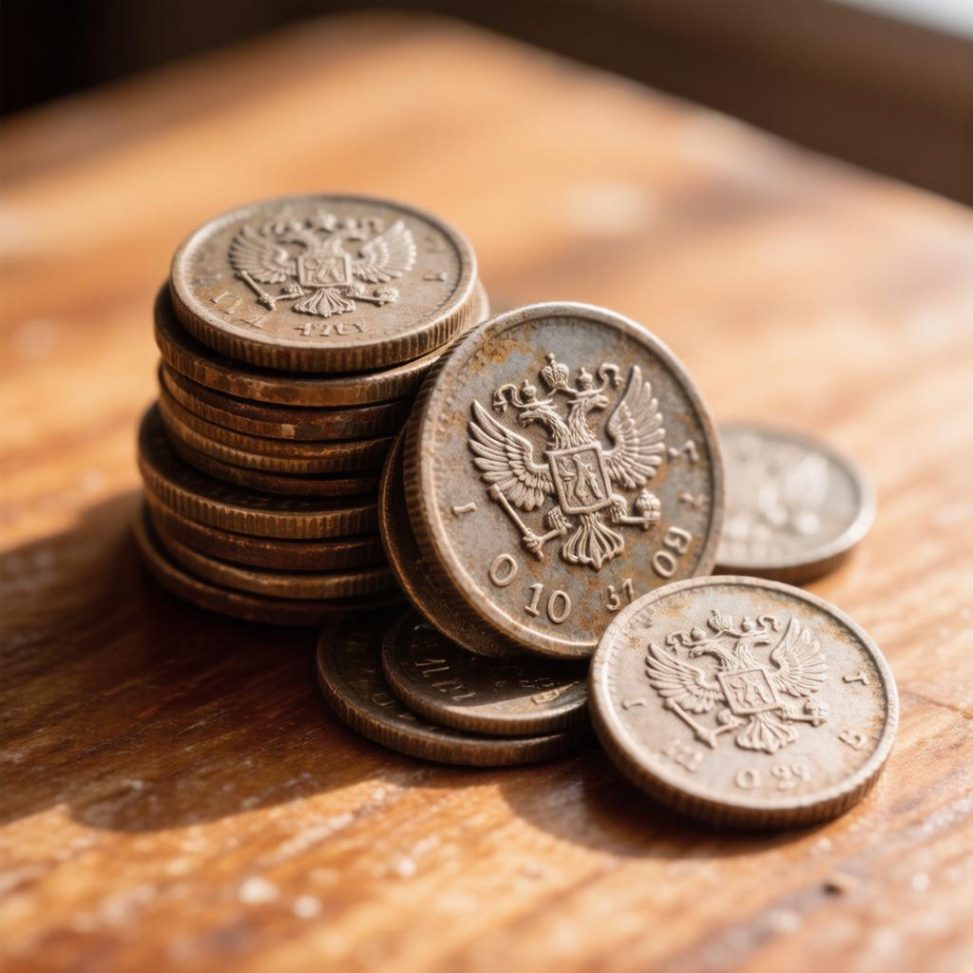
To tell if a coin is worth money, start by checking its date, mint mark, rarity, and condition. Some coins are valuable because only a small number were produced, while others are sought after for unusual minting errors, precious metal content, or exceptional preservation.
However, an old coin isn’t necessarily valuable, and a coin that looks unusual may simply be damaged. The most reliable way to estimate its value is to identify the exact coin and compare it with recent sales of similar examples in comparable condition.
You can do most of the initial research yourself using coin identification guides, price databases, and auction records. Here’s what to check before assuming a coin is rare or valuable.
How to Tell If a Coin Is Worth Money: 6 Things to Check
1. Check the Coin’s Date
The date is one of the first things to examine because it helps identify the exact issue and series.
A coin’s year can help you determine:
- when it was produced;
- whether that year had a relatively low mintage;
- which design or series it belongs to;
- whether its metal composition changed around that period.
Age alone does not make a coin valuable. Millions of some older coins were produced, and many remain common today.
On the other hand, certain dates are much harder to find because fewer coins were struck or fewer survived in collectible condition.
The date becomes particularly useful when combined with the mint mark. Two coins of the same denomination can have very different values even if they were produced in the same year.
2. Look for the Mint Mark
A mint mark is a small letter or symbol showing where a coin was produced.
Common U.S. mint marks include:
- P — Philadelphia;
- D — Denver;
- S — San Francisco;
- W — West Point.
The location of the mint mark varies depending on the denomination and design, so check an identification guide if you cannot find it.
Mint marks matter because different U.S. Mint facilities may have produced very different quantities of the same coin in a particular year. A lower-mintage issue from one mint may be much more desirable than a common version from another.
However, a missing mint mark does not automatically mean you have a rare error coin. Philadelphia historically produced many coins without a mint mark.
The U.S. Mint’s coin collecting basics can help with basic coin identification and collecting terminology.
3. Find Out How Rare the Coin Is
Once you know the date and mint mark, research how common that specific issue is.
Two concepts are useful:
Mintage is the number of coins originally produced.
Surviving population refers to how many examples are believed to still exist.
A low mintage can contribute to rarity, but it does not automatically make a coin expensive. Collector demand also matters.
For example, a coin with a relatively small mintage may still have modest value if few collectors want it. Meanwhile, a highly popular coin series can command strong prices for scarce dates because many collectors compete for limited examples.
The key principle is:
A coin’s value depends on rarity, condition, and collector demand—not simply its age.
Professional databases such as PCGS CoinFacts can help you research specific U.S. coins, varieties, mintages, and approximate values.
4. Examine the Coin’s Condition
Condition can make an enormous difference in a coin’s value.
Collectors use coin grading to describe how well a coin has been preserved. Professional grading commonly uses the Sheldon scale, which runs from 1 to 70.
In simple terms:
- Circulated coins show wear from normal use.
- Uncirculated coins have no wear from circulation.
- Mint State coins receive numerical grades from MS-60 through MS-70.
- MS-70 represents the highest grade for a qualifying Mint State coin.
When examining a coin, look at:
- visible wear;
- sharpness of the design;
- scratches;
- corrosion;
- dents or other damage;
- original surface quality.
Two coins with the exact same date and mint mark can be worth dramatically different amounts if one is heavily worn and the other survives in exceptional condition.
Estimating a professional grade from photographs alone can be difficult, so treat your own condition assessment as a starting point rather than a definitive grade.
5. Look for Genuine Minting Errors
Some coins are valuable because something unusual happened during the manufacturing process.
Recognized mint errors can include:
- off-center strikes;
- double strikes;
- clipped planchets;
- certain doubled-die varieties.
The important distinction is between a minting error and post-mint damage.
A minting error occurred while the coin was being produced. Post-mint damage happened later.
Scratches, flattened areas, corrosion, cuts, dents, or coins that were bent after leaving the mint usually do not become valuable simply because they look unusual.
Coins are also struck, not printed, so descriptions such as “printing error” are generally incorrect for coinage.
Even genuine mint errors are not automatically worth thousands of dollars. Their value depends on the type of error, how dramatic it is, its rarity, and collector demand.
6. Check Whether the Coin Contains Precious Metals
Some coins have additional value because they contain silver or gold.
Many U.S. dimes, quarters, and half dollars dated 1964 or earlier were struck in 90% silver. Other U.S. coins have different silver compositions depending on denomination and year.
This creates three different kinds of value to understand:
Face value — the denomination printed or indicated on the coin.
Metal or melt value — the value of the precious metal contained in it.
Collector value — what a collector may be willing to pay for that specific coin.
A common silver coin may derive much of its value from its metal content. A rare-date silver coin in excellent condition, however, can have a collector value far above its melt value.
Not every old U.S. coin contains precious metal, so always identify the exact denomination, year, and type before making assumptions.
How to Find Out What Your Coin Is Actually Worth
Once you’ve identified the coin, the next step is comparing it with reliable pricing information.
1. Identify the Exact Coin
Record:
- denomination;
- year;
- mint mark;
- coin series;
- approximate condition;
- any suspected variety or error.
The more precise the identification, the more useful your price research will be.
2. Check a Reliable Coin Price Guide
Resources such as PCGS CoinFacts, the PCGS Price Guide, and the NGC Price Guide can give you an estimated value range.
Price guides are useful reference tools, but they do not guarantee what someone will pay for your individual coin.
Condition, eye appeal, certification, market demand, and other factors can affect the selling price.
3. Compare Recent Completed Sales
Completed sales are often more useful than asking prices.
Search for coins matching your example as closely as possible in:
- year;
- mint mark;
- denomination and type;
- grade or condition;
- variety.
The PCGS Auction Prices Realized database contains records from completed coin auctions.
This matters because someone can list an ordinary penny online for $5,000, but that does not make the penny worth $5,000.
Asking price is not the same as actual market value.
Even auction results should be interpreted carefully. A buyer’s premium may be included, and one unusually high sale does not guarantee that another coin will bring the same price.
4. Consider Professional Authentication
If your research suggests that a coin could be rare, valuable, or counterfeit-prone, professional authentication may be worthwhile.
Options include:
- an experienced coin dealer;
- PCGS;
- NGC.
Professional grading and certification cost money, so sending every ordinary circulated coin to a grading service usually does not make financial sense. The grading fee can exceed the value of inexpensive coins.
What Types of Coins Are Most Likely to Be Valuable?
Certain categories deserve closer inspection.
Rare-date coins may have low mintages or small surviving populations.
Recognized mint errors can attract collectors when the error is genuine and desirable.
High-grade coins may be valuable because relatively few examples survived with minimal wear or damage.
Silver and gold coins can have value based partly on precious metal content.
Collectible varieties may feature small but recognized differences in dies, lettering, dates, or other design details.
Not every coin in these categories is valuable. Its actual worth depends on the exact issue, condition, authenticity, and collector demand.
Should You Clean an Old Coin Before Selling It?
Usually, no.
Cleaning can permanently alter a coin’s original surface and reduce its collector value.
Avoid:
- polishing the coin;
- using abrasive cleaners;
- scrubbing it with a brush or cloth;
- trying to remove natural toning or patina.
Even a coin that looks dirty may be more desirable to collectors in its original state than after an improper cleaning.
If you think a coin may be valuable, handle it by the edges and keep it in an appropriate holder until it can be properly identified.
The best way to tell if a coin is worth money is to identify its date, mint mark, rarity, and condition, then compare it with verified sales of similar coins. While some coins are valuable because of minting errors or precious metal content, most ordinary circulated coins aren’t worth large amounts. If you think you’ve found something rare, avoid cleaning it and consider getting an expert opinion before selling.